Our Pages

Saturday, September 1, 2012

Puerto Princesa

Puerto Princesa Subterranean River


The archipelago of Palawan, Philippines consists of a huge variety of tropical forests, over 11,000sq km of coral reefs, mountains, 2,000km of coastline, marine wilderness with more than 2,000 species of fish.

Palawan has a full mountain-to-the-sea ecosystem and some of the most important forests in Asia.


The area is home to Puerto Princesa Subterranean River National Park which is also known as the “Underground River Cave“. Located only an hour flight from Manila, it is one of the world’s longest underground rivers – whole 8.2 km.

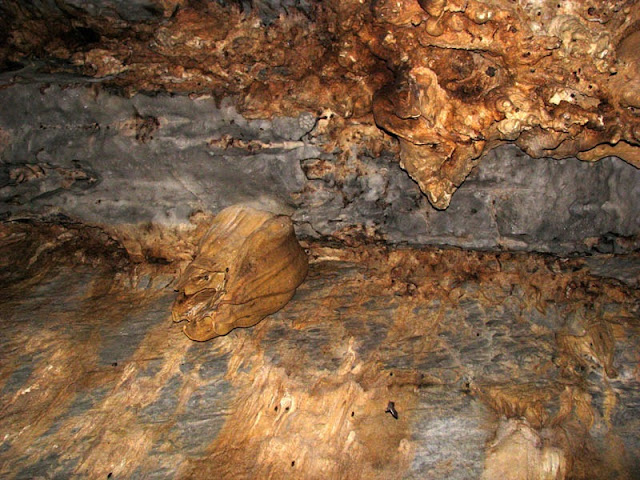
The underground river navigates through caves that includes major formations of stalactites and stalagmites, and several large deep chambers.

At the mouth of the cave, a clear lagoon is framed by ancient trees growing right to the water’s edge, creating a surreal landscape that reminds you of what untouched nature provides.

The area also represents a significant habitat for biodiversity conservation. Animals such as snakes, bats, large lizards,  squirrels and fishes live in the cave, and many other special of animals in the surrounding area.

Puerto Princesa features a lot of exciting activities such as rock climbing, bird watching, seeing mangrove trees, and tours in Sabang River. Enjoy these videos to see a virtual tour of what to expect when you visit Puerto Princesa!


MORE INFORMATION ON PUERTO PRINCESA:
TRAVEL LINKS: Fly Cheap! Airfare Secrets Revealed! Adventures into the Unknown The Travel Secrets Guide Fly Cheap! Airfare Secrets Revealed! Insider Cruise Tips!

WILDLIFE DISCUSSION FORUMS:

Wednesday, August 1, 2012

Carlsbad Caverns

Carlsbad Caverns National Park


I am so sorry for the delay in posting this article today. Aside from having an extremely hectic schedule today and being behind the gun a bit. I wanted to give this article the justice  it deserved because I found this particular place so intriguing when I first discovered it. One of the advantages of doing this blog is I get to experience all these places virtually before I share them with you, and I enjoy looking up the folk lore of certain places.

One of the things I was privileged to do at a young age was to travel outside of the country with my family. Going to Canada was nothing new, we had done that a few times since I was a child. However, going to Acapulco Mexico was more than just a vacation, it was an adventure ahead of time learning about the culture, their trading practices, the legends or folk lore of the city, and the places that were around it. I enjoyed learning about their culture and history, but most of all I enjoyed discovering cool places to go see. Every time we traveled out of the country I was encouraged to take time ahead to learn about it, so that it was more than just a vacation, it was an opportunity to learn. 

Carlsbad New Mexico has an interesting folk lore, and among it's interesting places to visit, the Caverns are on the top of the list.  Between the indigenous bats and the unearthly rock formations, these caverns offer another opportunity to see one of the earths natural wonders. The largest cave chamber, the Big Room, is a natural limestone chamber which is almost 4,000 feet long, 625 feet wide, and 350 feet high at the highest point. It is the third largest chamber in North America and the seventh largest in the world. The park contains 116 caves.

This is the The Chandelier Ballroom in Lechuguilla Cave. Lechuguilla Cave is the 6th longest cave in the world (4th longest in the United States) and the deepest limestone cave in the country. The historic cave contained a 90-foot (27 m) entrance pit known as Misery Hole, which led to 400 feet (122 m) of dry dead-end passages.

Until recently, the National park was closed due to a fire that stretched across 30,438 acres along Highway 62/180 from Rattle Snake Canyon to Dark Canyon Road, leaving charred remains of desert plants in its path.

Balloon Ballroom
Located in the ceiling above the main entrance hall, this small room was first accessed by tying a rope to a whole bunch of balloons and floating them up into the passage.
Bat Cave
A large, unadorned rocky passage connected to the main entrance corridor. The majority of the cave's bat population lives in this portion of the cave, which was mined for bat guano in the early 20th century.
Bell Cord Room
Named for a long, narrow stalactite coming through a hole in the ceiling, resembling the rope coming through a church steeple to ring the bell. This room is located at the end of the Left Hand Tunnel.

Bifrost Room
Discovered in 1982, it is located in the ceiling above Lake of the Clouds. Its name refers to a Norse myth about a world in the sky that was accessed from Earth by a rainbow. The room was given this name because of its location above the Lake of the Clouds and its colorful oxide-stained formations.
Big Room or The Hall of the Giants
The largest chamber in Carlsbad Caverns, with a floor space of 357,469 square feet.

Chocolate High
A maze of small passages totalling nearly a mile in combined length, discovered in 1993 above a mud-filled pit in the New Mexico Room known as Chocolate Drop.
Green Lake Room
The uppermost of the "Scenic Rooms", it is named for a deep, malachite-colored pool in the corner of the room. In the 1940s, when the military was testing the feasibility of Carlsbad Cavern as an emergency fallout shelter, the Green Lake was used to look for ripples caused by a nuclear bomb test many miles away. None appeared. 
Guadalupe Room
Discovered by a park ranger in 1966, this is the second largest room in Carlsbad Caverns. It is known for its dense collection of "soda straw" stalactites.
Hall of the White Giant
A large chamber containing a large, white stalagmite. Rangers regularly lead special wild-cave tours to this room.
King's Palace
The first of four chambers in a wing known as the "scenic rooms", it is named for a large castle-like formation in the center of the room.
Lake of the Clouds
The lowest known point in the cave. It is located in a side passage off the Left Hand Tunnel. It is named for its large lake containing globular, cloud-like rock formations that formed under water when the lake level was much higher.
Left Hand Tunnel
A long, straight passage marked by deep fissures in the floor. These fissures are not known to lead anywhere. The Left Hand Tunnel leads to the Lake of the Clouds and the Bell Cord Room.
Mabel's Room
A moderate-sized room located past the Talcum Passage in Lower Cave.
Mystery Room
A large, sloping room located off the Queen's Chamber, named for an unexplained noise heard only here.
New Mexico Room
Located adjacent to the Green Lake Room and accessed by means of a somewhat narrow corridor.
New Section
A section of fissures east of the White Giant formation and paralleling the Bat Cave. New discoveries are still being made in this section.
Papoose Room
Located between the King's Palace and Queen's Chamber.
Queen's Chamber
Widely regarded as the most beautiful and scenic area of the cave. Jim White's lantern went out in this chamber while he was exploring, and he was in the dark for over half an hour.
Spirit World
Located in the ceiling of the Big Room at its highest point (an area known as the Top of the Cross), this area is filled with white stalagmites that resembled angels to the room's discoverers.
Talcum Passage
A room located in Lower Cave where the floor is coated with gypsum dust.

The Rookery
One of the larger rooms in Lower Cave. A large number of cave pearls are found in this area.
Underground Lunchroom
Located in the Big Room at the head of the Left Hand Tunnel. It contains a cafeteria that was built in the 1950s, and is where the elevators from the visitor center exit into the cave.
More information about Carlsbad Caverns at Wayfaring.com

TRAVEL LINKS: Fly Cheap! Airfare Secrets Revealed! Adventures into the Unknown The Travel Secrets Guide Fly Cheap! Airfare Secrets Revealed! Insider Cruise Tips!

WILDLIFE DISCUSSION FORUMS:

Sunday, July 1, 2012

Antelope Canyon

Antelope Canyon, Arizona

The last couple of weeks I talked about fantastical places that were outside of the U.S. so this week I wanted to come a little closer to home and show you some sights you may not have realized are right in our own back yard.


Antelope Canyon is considered sacred ground to the Navajo Indians, This "slot" canyon is now one of the most visited and photographed locations in the United States Southwest. You could spend an entire day there and still not see everything.


The Navajo name for Upper Antelope Canyon is Tsé bighánílíní, which means "the place where water runs through rocks." Lower Antelope Canyon is Hazdistazí (advertised as "Hasdestwazi" by the Navajo Parks and Recreation Department), or "spiral rock arches." Both are located within the LeChee Chapter of the Navajo Nation


Antelope Canyon was formed by erosion of Navajo Sandstone mostly due to flash flooding. During monsoon season, rainwater runs into the extensive basin above the slot canyon sections, picking up speed and sand as it rushes into the narrow passageways. 


Over time the passageways are eroded away, making the corridors deeper and smoothing hard edges in such a way as to form characteristic 'flowing' shapes in the rock.  NOTE: Some of these images will be available as desktop and wallpaper images on the Real 2 Net site soon.


Flooding in the canyon still occurs with the most recent one being on October 30, 2006. It lasted 36 hours, and caused the Tribal Park Authorities to close Lower Antelope Canyon for five months. 
(This next image is my favorite because it is shaped like a Heart)


Antelope Canyon is located near Lake Powell, North of Flagstaff Arizona just before the Utah border, and it's a short drive from either Phoenix or Las Vegas. Here is a map so you can see it's location more clearly.
Nature has so many wonders to behold and enjoy. If man can come to a point of respect and revere nature for the awesome force that it is, I believe many things in our society would change. The Indians knew what they were doing, we should take a hint from them :-)

MORE INFORMATION ON ANTELOPE CANYON:
TRAVEL LINKS: Fly Cheap! Airfare Secrets Revealed! Adventures into the Unknown The Travel Secrets Guide Fly Cheap! Airfare Secrets Revealed! Insider Cruise Tips!

WILDLIFE DISCUSSION FORUMS:

Friday, June 1, 2012

The Cotton Castle

The Cotton Castle, Pamukkale

There once was a young girl who was unmarried and ugly. No one wanted to marry her, so she decided to commit suicide by throwing herself off the travertine. She fell into one of the pools of the natural travertine terrace, but she did not die. 


Because of the magical water in the natural pool, she turned into a very beautiful girl and caught the attraction of the lord of Denizli while he was passing by. At that moment, the lord fell in love with this young and beautiful girl and they were soon married.


This is the ancient folklore of Pamukaale, which means "Cotton Castle" in Turkish, and it is the modern name of the ancient Greek city of Hierapolis. It's called the Cotton Castle because the travertine is white. From a distance, when approaching the terrace, it appears to be covered in snow.


Pamukkale is considered as one of the most original destinations in Turkey and the 8th wonder in the world. It was built near hot springs which, over the centuries, have partially covered the ancient Greek ruins in natural terraces that have formed due to the high mineral content of the water flowing out of the springs.


The water sources have an average temperature of 35 degrees Celsius (90 degrees Fahrenheit) and contains large amounts of hydrogen carbonate and calcium. As the water cools calcium carbonate gets precipitated and forms thick white layers of so-called travertine.


The mineral water of Pamukkale has been scientifically proven to have positive healing effects on heart disease, arthritis, stroke, rheumatism, nervous and physical exhaustion, eye and skin diseases, circulatory problems, digestive maladies, nutritional disorders, hypertension, kidney stones, urethra and kidney disease. In addition to the curing effects of the water, people also believe in the beautifying power of the water.


Pamukkale is not only a favorite spa resort today, but was at the center of a pagan cult in antiquity where people visit periodically for beauty and health.


Denizli’s popular site Pamukkale is a must-see natural thermal water source of ancient Greece, but it isn't the only attraction. The ancient sites of Laodicea, Tripolis, Hierapolis, Colossae, Eumania, Heraklia Salbace, Tabae, Dionysopolis, Apollon Lermenos Temple, Sebatopolis, Anava, Trapezopolis, Attuda, and Apollonia Salbace are also inside the borders of Denizli city.


Portions of the upcoming movie release "Ghost Rider - Spirit of Vengeance" was filmed at Pamukkale and Cappadoci. The movie stars Nicholas Cage and is set to be released February 17, 2012.


I have seen some magical places in my life time but when I saw this place I knew there was a heaven on earth. I can understand why Kings and Emperors traveled to vacation here in ancient times. This is  truly the Pièce de résistance of hot springs on this earth. A must see to add to your bucket list!
To see more pictures and find out more information on Pumakkale, visit one of the links below.

MORE INFORMATION ON PAMUKKALE:
TRAVEL LINKS: Fly Cheap! Airfare Secrets Revealed! Adventures into the Unknown The Travel Secrets Guide Fly Cheap! Airfare Secrets Revealed! Insider Cruise Tips!
    WILDLIFE DISCUSSION FORUMS: